COLREGS Explained: Collision Rules Every Sailor Needs
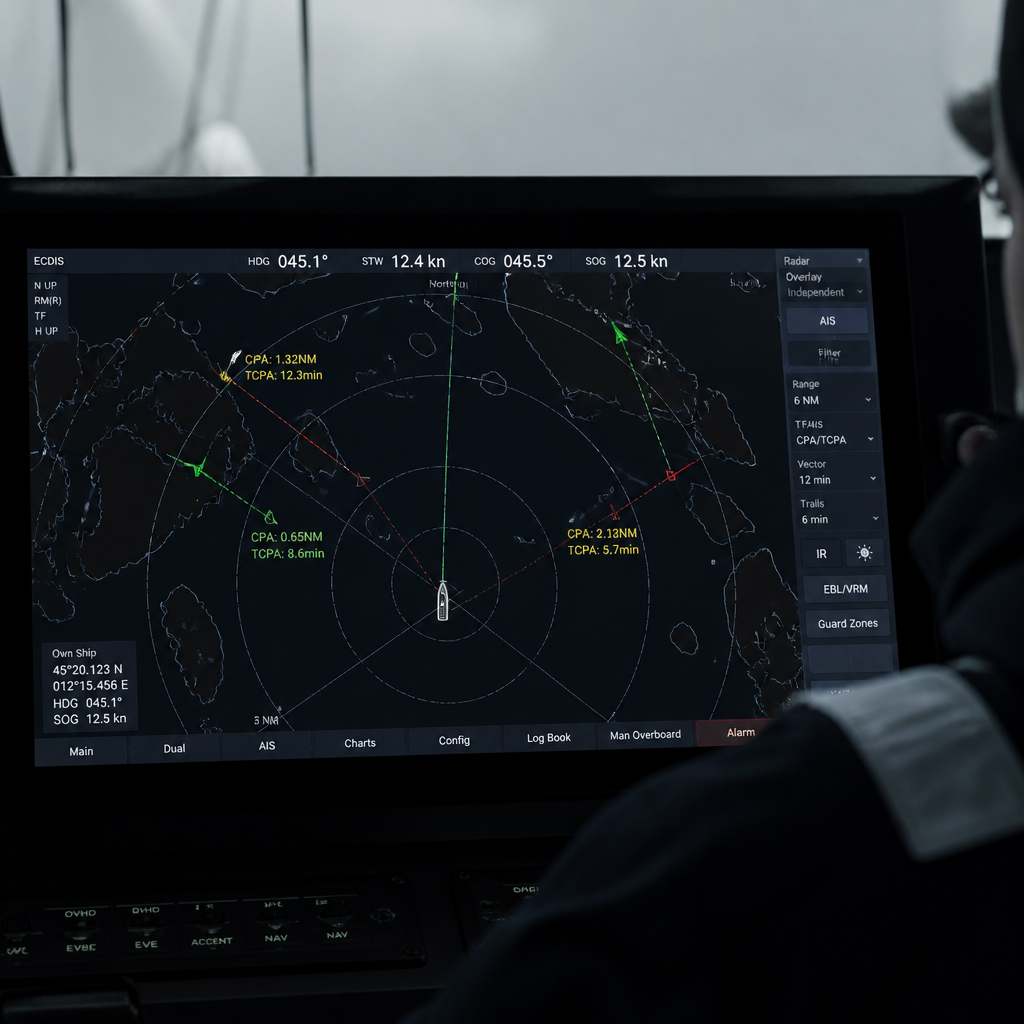
Every collision at sea is preventable. Yet mariners continue to lose vessels, and lives, because they misread a crossing situation, ignore a fog signal, or assume "right of way" means they are untouchable. COLREGS explained simply means understanding the 41 rules that govern every vessel on navigable waters worldwide, from a dinghy to a supertanker. These are not advisory guidelines. They are legally binding collision regulations that every coastal sailor must know cold, before leaving the dock.
What Are COLREGS and Why Do They Apply to You
COLREGS stands for the Convention on the International Regulations for Preventing Collisions at Sea, adopted by the International Maritime Organization (IMO) in 1972. The 1972 Convention replaced the earlier Collision Regulations of 1960 and introduced formal recognition of traffic separation schemes under Rule 10. These rules define how vessels must behave to avoid collisions, what lights and shapes they must display, what sound signals they must use, and how responsibility is assigned when two vessels meet.
COLREGS apply to all vessels on the high seas and all waters connected to the high seas that are navigable by seagoing vessels. That includes your 32-foot sloop in coastal waters, your RIB crossing the harbour entrance, and every commercial ship sharing the same anchorage. There are no recreational exemptions. Some countries adopt supplementary inland navigation rules, but those domestic rules must align as closely as possible with COLREGS.
Rule 2 is the foundation of the entire system: no rule excuses any mariner from the obligation to exercise good seamanship and due caution. Even when you have the right of way, you still carry the duty to avoid collision. Understanding COLREGS is not about finding the rule that protects you. It is about knowing exactly what action to take so a collision never happens.
Quick Takeaways
- 41 rules, six parts, four annexes: COLREGS are organised into Parts A through F plus technical annexes covering lights, sound signals, and distress signals. Know the structure before memorising individual rules.
- Rule 2 overrides everything: Good seamanship and due caution always apply. Having the stand-on right does not remove your obligation to avoid a collision if the give-way vessel fails to act.
- Sailing vessels are not automatically stand-on: A sailing vessel using its engine is classified as a power-driven vessel under Rule 25 and must display a motoring cone by day. It loses its privileged status relative to other sail-only vessels.
- The hierarchy in Rule 18 has exceptions: Rules 9, 10, and 13 override Rule 18. A vessel not under command overtaking another from astern is still the burdened vessel under Rule 13.
- A constant bearing means collision risk: Under Rule 7, if another vessel's compass bearing does not change as the range closes, you must assume a collision risk exists and act accordingly.
- Fog requires a completely different approach: In restricted visibility, Rule 19 applies, not the head-on and crossing rules. Any vessel detecting another by radar must determine if risk exists and take early, substantial action.
- Vessels under 7 metres face practical compromises on lights: Rule 25 allows very small sailing vessels to carry a torch or lantern instead of fitted navigation lights, but only if fitting fixed lights is genuinely impracticable. Do not use this as an excuse.
These rules are not optional theory. Every coastal passage you make involves at least one scenario where one of these points determines the outcome. Build your seamanship around them, not around assumptions about what other skippers will do.
The Structure of the 41 Rules
COLREGS contain 41 rules organised into six parts, plus four technical annexes. Understanding the architecture tells you where to look when a specific situation arises at sea.
Part A: General (Rules 1 to 3). Rule 1 establishes scope. Rule 2 sets the overriding duty of good seamanship. Rule 3 provides the definitions you need for every other rule, including what constitutes a "vessel not under command," a vessel "restricted in ability to manoeuvre," and a vessel "constrained by her draught." Get these definitions exact. Courts and marine insurers use them with precision.
Part B: Steering and Sailing Rules (Rules 4 to 19). This is the operational core of the collision regulations. It divides into three sections: conduct in any condition of visibility (Rules 4 to 10), conduct of vessels in sight of one another (Rules 11 to 18), and conduct in restricted visibility (Rule 19). Rules 5, 6, 7, 8, 16, and 17 are the rules coastal sailors cite most in collision cases.
Parts C, D, E, and F. Part C (Rules 20 to 31) specifies navigation lights and day shapes for every vessel type. Part D (Rules 32 to 37) defines sound and light signals. Part E (Rule 38) covers exemptions. Part F (Rules 39 to 41) addresses compliance and dispute procedures. The annexes cover technical specifications for lights, sound signal equipment, and distress signals.
Pro tip: When studying COLREGS, do not treat Part B as separate from Part C. Knowing your own required lights is just as important as knowing right-of-way rules. The skipper who cannot identify an approaching vessel's type from its light configuration is already behind on the decision cycle.
Look-Out, Safe Speed, and Risk of Collision
Rules 5, 6, and 7 form the base layer of all collision avoidance. Every other rule depends on them working correctly. Skimp on any one of these three and the system breaks down before a crossing or head-on situation even develops.
Rule 5: The Proper Look-Out. Every vessel must at all times maintain a proper look-out by sight and hearing as well as by all available means appropriate to the prevailing circumstances and conditions, so as to make a full appraisal of the situation and of the risk of collision. "All available means" includes radar, AIS, and any other navigation aid your vessel carries. Watching the horizon while ignoring your chartplotter AIS display is not compliance with Rule 5. It is negligence with a comfortable posture.
Rule 6: Safe Speed. Every vessel must at all times proceed at a safe speed so that she can take proper and effective action to avoid collision and be stopped within a distance appropriate to the prevailing circumstances and conditions. Safe speed is not a fixed number. It changes with visibility, traffic density, sea state, stopping distance, and whether radar is in use. In fog, safe speed may mean bare steerage way. In a busy harbour approach at night, it means you can stop before reaching any contact your radar shows.
Rule 7: Assessing Risk of Collision. Rule 7 mandates the use of all available tools and observations to evaluate the risk of collision. The critical test is compass bearing. If the bearing to another vessel does not change as the range decreases, a collision risk exists and you must assume it does. A common mistake is treating a slowly changing bearing as safe. If range is closing rapidly, even a slightly changing bearing can still put two vessels in the same position at the same time.
The Right-of-Way Hierarchy Every Sailor Must Memorise
Rule 18 establishes the hierarchy of responsibilities between different vessel types. From most privileged to least, the order runs: vessel not under command (NUC), vessel restricted in ability to manoeuvre (RAM), vessel constrained by draught, vessel engaged in fishing, sailing vessel, and power-driven vessel. Each vessel in the list must keep out of the way of every vessel above it.
A sailing vessel under sail alone sits fifth in that hierarchy. It must keep clear of NUC, RAM, constrained-by-draught, and fishing vessels. It stands on over power-driven vessels only. This is not the sweeping priority that many recreational sailors assume. In practice, the hierarchy means that a sailing yacht approaching a vessel trawling its nets must give way, regardless of point of sail or wind angle.
The right-of-way hierarchy tells you who takes priority in open water. Rules 9, 10, and 13 override it completely in narrow channels, traffic separation schemes, and overtaking situations. Know when the hierarchy applies and when it does not.
The critical exception: Rule 18 opens with "except where Rules 9, 10, and 13 otherwise require." A vessel not under command overtaking another vessel from astern is still the give-way vessel under Rule 13, regardless of its NUC status. A sailing vessel in a narrow channel cannot obstruct a vessel that can only safely navigate within the channel, even if that vessel is power-driven. Hierarchy without context is dangerous.
Pro tip: When your sailing vessel uses its engine, even with sails hoisted, you are a power-driven vessel under COLREGS. By day, Rule 25 requires you to exhibit a black cone, point downward, in the forward part of the vessel. Failing to display this cone means other vessels cannot correctly identify your status, and you cannot claim sailing vessel priority.
Crossing, Head-On, and Overtaking Situations
Part B Section II covers the three encounter types you will face in coastal sailing. Each has specific rules, and recognising which type of encounter you are in determines every subsequent action.
Head-On Situations: Rule 14. Rule 14 covers head-on situations where two power-driven vessels are meeting on nearly reciprocal courses. Both vessels must alter course to starboard so that each passes on the port side of the other. The rule applies when there is any doubt about whether the situation is head-on. Alter to starboard, make it early, make it large, and make it obvious.
Crossing Situations: Rule 15. Rule 15 applies when two power-driven vessels are crossing and risk of collision exists. The vessel that has the other on her starboard side is the give-way vessel. She must keep out of the way and, if circumstances allow, avoid crossing ahead of the stand-on vessel. This is one of the most frequently misapplied rules in recreational sailing. The question is not which vessel is faster or which has better sea room. The question is: which vessel has the other on its starboard side.
Overtaking Situations: Rule 13. Rule 13 overrides all other right-of-way rules. Any vessel overtaking another must keep out of the way of the vessel being overtaken. A vessel is overtaking if it is approaching another from a direction more than 22.5 degrees abaft the other's beam, that is, within the arc of the overtaken vessel's sternlight. Once an overtaking situation is established, it remains so until the passing is complete and clear. The faster vessel carries the burden, regardless of vessel type or its position in the Rule 18 hierarchy.
Sailing Vessels Meeting Each Other: Rule 12. Rule 12 is specific to two sailing vessels approaching each other. When on opposite tacks, the vessel on port tack gives way to the vessel on starboard tack. When on the same tack, the windward vessel gives way to the leeward vessel. When a port-tack vessel cannot determine on which tack the other vessel is sailing, the port-tack vessel gives way. These rules are absolute. There is no ambiguity when applied correctly.
Give-Way and Stand-On Vessels: What Each Must Do
Rule 16 covers the give-way vessel's obligations: take early and substantial action to keep well clear. Not a minor helm adjustment at the last moment. Early means the other vessel can clearly see your action. Substantial means a large enough alteration to eliminate any doubt about your intentions.
Rule 17 covers the stand-on vessel. The stand-on vessel shall maintain course and speed. This is not permission to be passive. If the give-way vessel fails to take appropriate action, the stand-on vessel may take action by its own manoeuvre alone as soon as it becomes apparent that the give-way vessel is not acting. More importantly, once collision cannot be avoided by the give-way vessel alone, the stand-on vessel must take action. "Maintaining course and speed" into a collision because you had the right of way is not a defence. It is evidence of poor seamanship.
The practical discipline here is timing. The stand-on vessel should be watching, assessing the give-way vessel's actions, and preparing to act. By the time doubt turns to concern, the window for effective action is already narrowing. The MARLOG AI compass applies exactly this logic to route planning and COLREGS guidance, giving coastal sailors real-time situational analysis that supports their decision-making rather than replacing seamanship judgment.
Navigation Lights, Day Shapes, and Sound Signals
Part C specifies exactly what lights every vessel type must display from sunset to sunrise and in restricted visibility. Part D covers sound signals. These are not decoration. They tell every approaching vessel exactly what you are and what you are doing.
Sailing Vessels Under Sail: Rule 25. A sailing vessel underway must show a port sidelight (red), a starboard sidelight (green), and a stern light (white). Vessels under 20 metres may combine the sidelights in a single bicolour lantern at the bow. Sailing vessels under 7 metres must show these lights if practicable, but may otherwise carry a torch or lantern showing a white light in sufficient time to prevent collision. Relying on the torch exemption in busy shipping lanes is not practicable, regardless of vessel length.
Sound Signals in Fog: Rule 35. In restricted visibility, a sailing vessel under sail sounds one prolonged blast followed by two short blasts at intervals of not more than two minutes. A power-driven vessel making way sounds one prolonged blast at intervals of not more than two minutes. A power-driven vessel stopped and making no way through the water sounds two prolonged blasts in succession with about two seconds between them. These signals are mandatory. They are your primary means of communication when visual contact is impossible.
Manoeuvring Signals: Rule 34. In sight of one another, power-driven vessels use whistle signals to indicate helm actions. One short blast means altering course to starboard. Two short blasts mean altering course to port. Three short blasts mean operating astern propulsion. Five or more short blasts is the doubt or danger signal, used when the intentions or actions of another vessel are not understood. Coastal sailors who do not carry a working whistle and use it are operating without a fundamental signalling tool the rules assume you have.
Restricted Visibility: The Rules Change
When visibility is restricted by fog, mist, heavy rain, or smoke, Rule 19 replaces the head-on and crossing encounter rules. This distinction is critical and frequently misunderstood. You are not in a "crossing situation" or a "head-on situation" if you cannot see the other vessel with the naked eye. You are in a restricted visibility situation governed entirely by Rule 19.
Under Rule 19, every vessel must proceed at a safe speed adapted to the restricted visibility. A vessel that detects another vessel by radar must determine whether risk of collision exists. If it does, the vessel must take avoiding action in good time. The prescribed action is: if possible, avoid altering course to port for a vessel forward of the beam (unless overtaking), and avoid turning toward a vessel abeam or abaft the beam. Reduce speed to a minimum if a fog signal is heard apparently forward of the beam, or if collision cannot be avoided.
The single most dangerous assumption in fog is that your AIS or radar gives you a complete picture. Rule 5 requires maintaining a proper look-out by all available means precisely because no single system is infallible. Keep the watch, use the sound signals, and reduce speed. The MARLOG platform integrates real-time marine forecasting with sailing window analysis so you can plan to avoid restricted visibility passages altogether, which is always the best collision avoidance strategy.
Comparison: Three Critical Encounter Scenarios
The table below breaks down the three most common COLREGS encounter types, the specific rule that applies, and the exact required action from each vessel. Use this as a quick reference for passage planning and watch briefings.
- Head-on (two power-driven vessels on reciprocal courses): Governing Rule: Rule 14; Required Action: Both vessels alter to starboard and pass port-to-port. No give-way or stand-on distinction. Both act..
- Crossing (power-driven vessel has another on her starboard side): Governing Rule: Rule 15 and Rule 16/17; Required Action: Vessel with other on starboard is give-way: takes early, substantial action. Vessel on port side stands on, monitors, and acts if give-way vessel fails..
- Overtaking (vessel approaches more than 22.5° abaft other's beam): Governing Rule: Rule 13; Required Action: Overtaking vessel gives way and keeps clear until well past and clear. Rule 13 overrides Rule 18 hierarchy. Rule stands until overtaking is complete..
Common COLREGS Mistakes Coastal Sailors Make
The rules are clear. The mistakes are predictable. Address these directly on every passage.
Assuming sailing vessels always have priority. A sailing vessel using its engine is a power-driven vessel. Full stop. No cone displayed means other vessels are operating on false information, and your insurance position in a collision is compromised. Hoist the cone or douse the sails. Do not do both without the cone.
Treating AIS as the sole look-out tool. Not every vessel carries AIS. Fishing vessels, small craft, and some commercial vessels in coastal waters may not be transmitting. Rule 5 requires sight, hearing, and all available means. AIS is one input, not the complete picture.
Confusing fog rules with clear-weather rules. In restricted visibility, Rules 11 to 18 do not apply. Rule 19 governs. The vessel you detect on radar is not the "give-way vessel" in a crossing sense. It is a contact in restricted visibility, and you both act under Rule 19 regardless of relative bearing.
Making small, late alterations as give-way vessel. Rule 16 requires early and substantial action. A five-degree alteration at a half-mile range is not compliance. It is a gesture. Make large, decisive alterations early so the stand-on vessel can see you are acting. The purpose of early action is to eliminate the stand-on vessel's doubt, not to barely achieve separation.
Ignoring the narrow channel rule. Rule 9 requires vessels to keep to the starboard side of a narrow channel. Sailing vessels and vessels under 20 metres must not impede the passage of vessels that can only safely navigate within the channel. Operating under sail in the main shipping lane of a harbour approach when a ferry needs that water is a Rule 9 violation, not a Rule 18 privilege.
The MARLOG seamanship academy covers all 41 COLREGS rules with dedicated courses and practice exercises, giving coastal sailors the structured, tested understanding that passage planning and night watches demand. Combine that with MARLOG's AI compass for real-time COLREGS collision avoidance guidance and you have a complete on-board decision support system.
Frequently Asked Questions
Do COLREGS apply to recreational sailing vessels? Yes. COLREGS apply to all vessels on navigable waters connected to the high seas, including recreational sailing vessels of any size. There are no exemptions based on vessel length, purpose, or flag. Individual countries may impose supplementary inland rules, but the core COLREGS obligations remain in force.
What is the difference between a give-way vessel and a stand-on vessel? The give-way vessel is required to take early and substantial action to keep well clear of the stand-on vessel. The stand-on vessel must maintain its course and speed while the give-way vessel acts. If the give-way vessel fails to act, the stand-on vessel first may, and eventually must, take action to avoid collision. Neither vessel is ever entirely passive under COLREGS.
When does a sailing vessel become a power-driven vessel under COLREGS? A sailing vessel using its engine, even with sails up and drawing, is classified as a power-driven vessel under COLREGS. Rule 25 requires it to display a black cone, point downward, in the forward part of the vessel during daylight hours. This affects its position in the Rule 18 hierarchy and its obligations in crossing and head-on situations.
What rule applies when two sailing vessels approach each other? Rule 12 applies. When the two sailing vessels are on opposite tacks, the vessel on port tack gives way to the vessel on starboard tack. When both are on the same tack, the vessel to windward gives way to the vessel to leeward. When a port-tack vessel cannot determine the other vessel's tack, the port-tack vessel gives way.
What sound signal does a sailing vessel make in fog? Under Rule 35, a sailing vessel under sail in restricted visibility sounds one prolonged blast followed by two short blasts, repeated at intervals of not more than two minutes. If the sailing vessel is also using its engine, it is a power-driven vessel and sounds only one prolonged blast at intervals of not more than two minutes.
Can the stand-on vessel always wait for the give-way vessel to act? No. Rule 17 allows the stand-on vessel to act once it becomes apparent the give-way vessel is not taking appropriate action. It requires the stand-on vessel to act as soon as collision cannot be avoided by the give-way vessel alone. Waiting until the last moment and then claiming stand-on status is not a defence against a collision charge. Good seamanship under Rule 2 applies regardless of which vessel nominally has right of way.
How does MARLOG help sailors apply COLREGS in practice? MARLOG's AI compass provides real-time COLREGS collision avoidance guidance integrated directly into passage planning. The seamanship academy includes dedicated COLREGS courses with 288 practice exercises covering all 41 rules, so sailors can build and test their understanding before they need it at sea. Paired with real-time marine forecasting, MARLOG gives coastal sailors the tools to anticipate encounter situations rather than react to them.
Have you ever encountered a COLREGS situation at sea that caught you off guard? Share your experience in the comments. Your insight helps other sailors build better situational awareness.
References
- International Maritime Organization: Official COLREGS convention text and rule-by-rule summary
- IMO overview of preventing collisions at sea and key rule amendments
- US Coast Guard Navigation Center: Amalgamated International and Inland Navigation Rules full text
- AMN Nautical: Structured guide to COLREGS parts, rules, and application for mariners
- Professional Mariner: In-depth analysis of Rule 18 vessel hierarchy and its practical exceptions